What is the “Trust Curve” in treatment adherence support programs?

The “Trust Curve” describes how a doctor’s use of a treatment adherence support program evolves as confidence in the platform builds, from managing adherence challenges in patients already struggling with treatment to enrolling new patients from day one.
When a doctor first tries a new treatment adherence support program for their patients, caution is natural. Rather than immediately introducing the platform to every new patient, HCPs often start by testing it on the cases where support is most needed: patients who are already mid-treatment and struggling to stay on course.
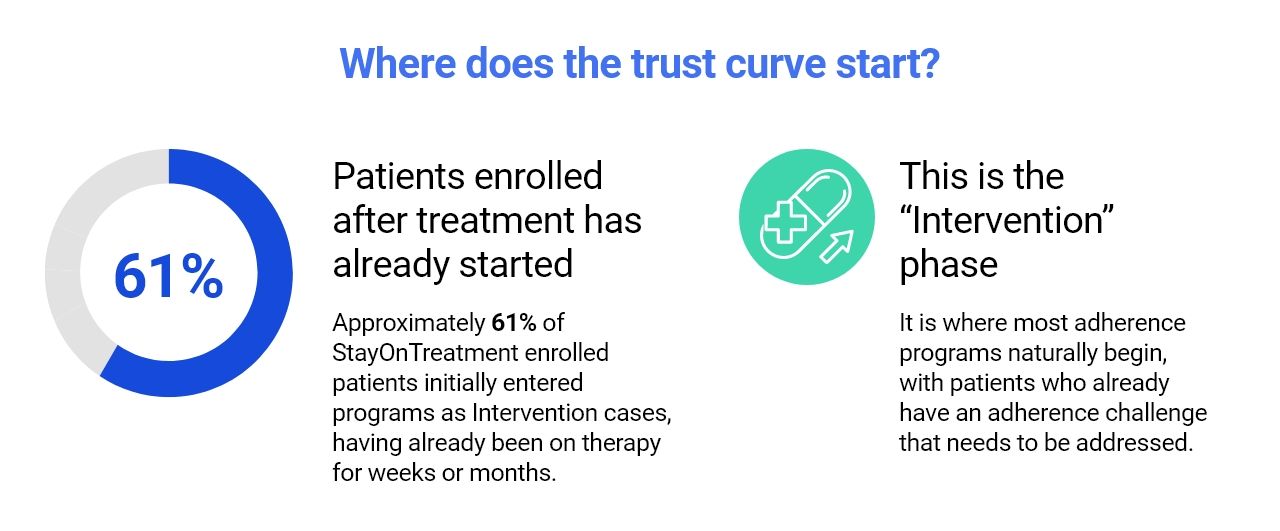
We call this the “Intervention” phase. It is where most adherence programs naturally begin with patients who already have an adherence challenge that needs to be addressed.
In fact, approximately 61% of StayOnTreatment enrolled patients initially entered programs as intervention cases, having already been on therapy for weeks or months.
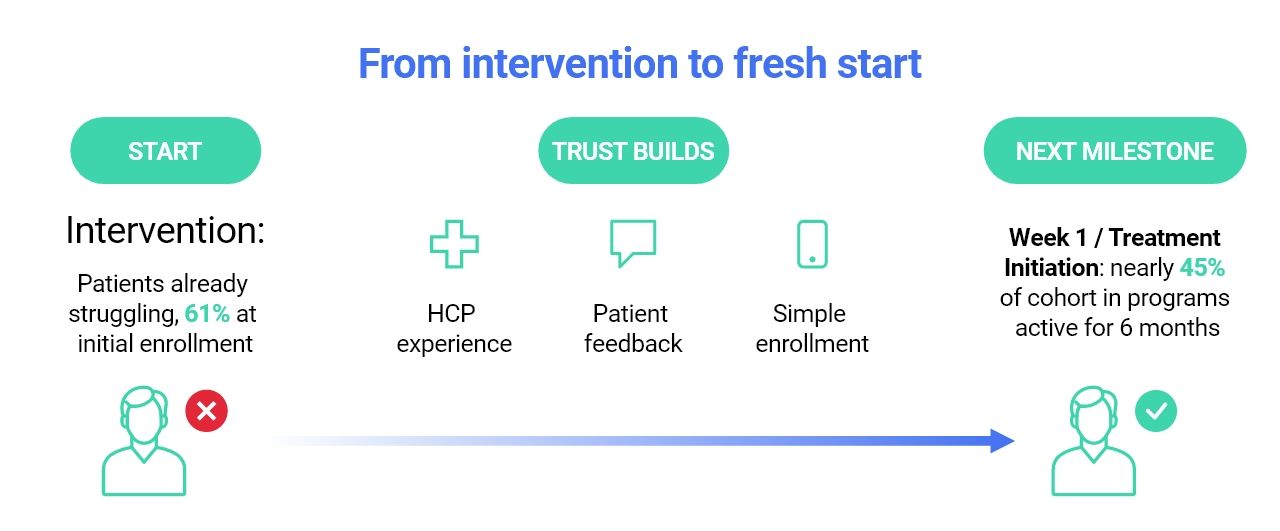
In programs active for 6 months, the Intervention cohort remains strong at 55%. This confirms that the Trust Curve does not replace one type of enrolled patient with another. Instead, it expands the role of the platform to support two distinct patient moments.
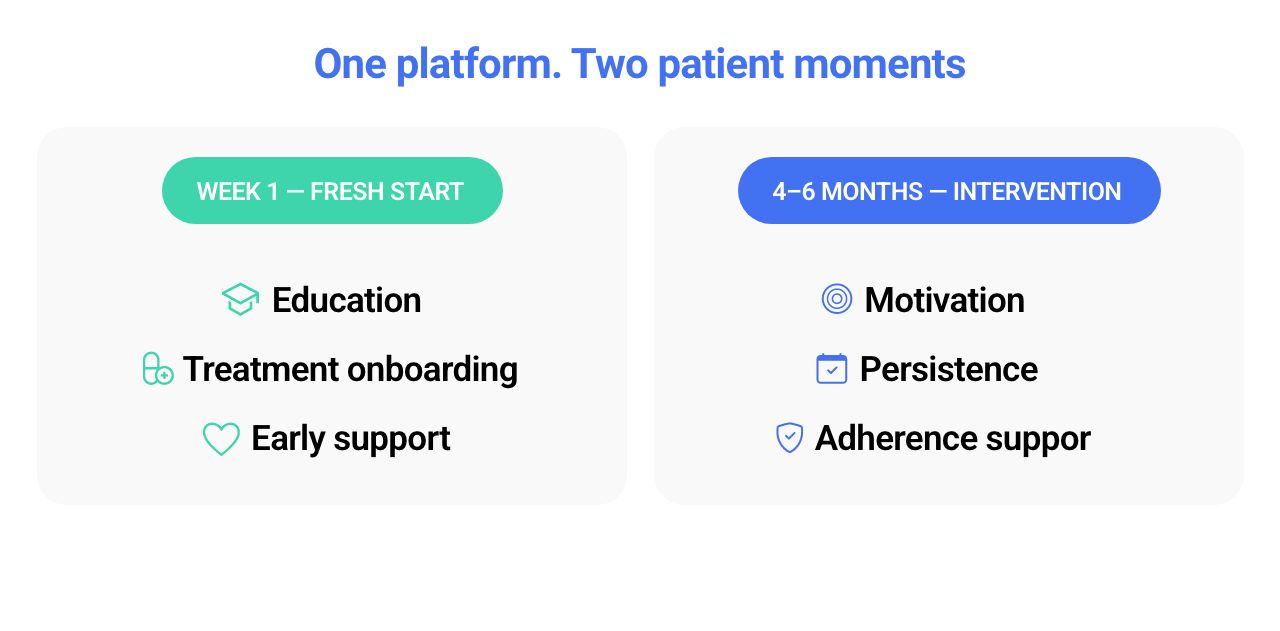
One platform. Two patient moments
The 0-app design allows the program to support both ends of this journey:
StayOnTreatment earns trust by first proving its value in the difficult cases, the patients who are already struggling and need intervention. As doctors become confident users, experience the simplicity of enrollment and see positive patient feedback, that trust grows.
And as confidence grows, adoption expands from supporting patients who are already under treatment to proactively support new treatment initiations from day one.
The result is not a replacement of one patient profile with another. It is a broader role for treatment adherence support, one that can help patients start well, stay engaged, and persist throughout their treatment journey.