The 137% engagement gap: Why a one-size-fits-all adherence program may fail specialists?

New program launch data reveals a 137% gap in patient enrollment velocity between specialist groups and shows why one-size-fits-all adherence support may not work for every HCP.
Healthcare professionals do not all engage with patient support programs in the same way. Even within a single therapeutic area, their workflows, priorities and expectations can be significantly different.
Our active HCP base is led by specialists in diabetes, nutrition, metabolic diseases and cardiology, with cardiometabolic specialties representing approximately 72% of the group. The remaining share is distributed across GPs, neurologists and other specialties, creating a multi-therapy coverage landscape.
And when we look at how quickly these HCPs enroll patients, the differences become even more visible.
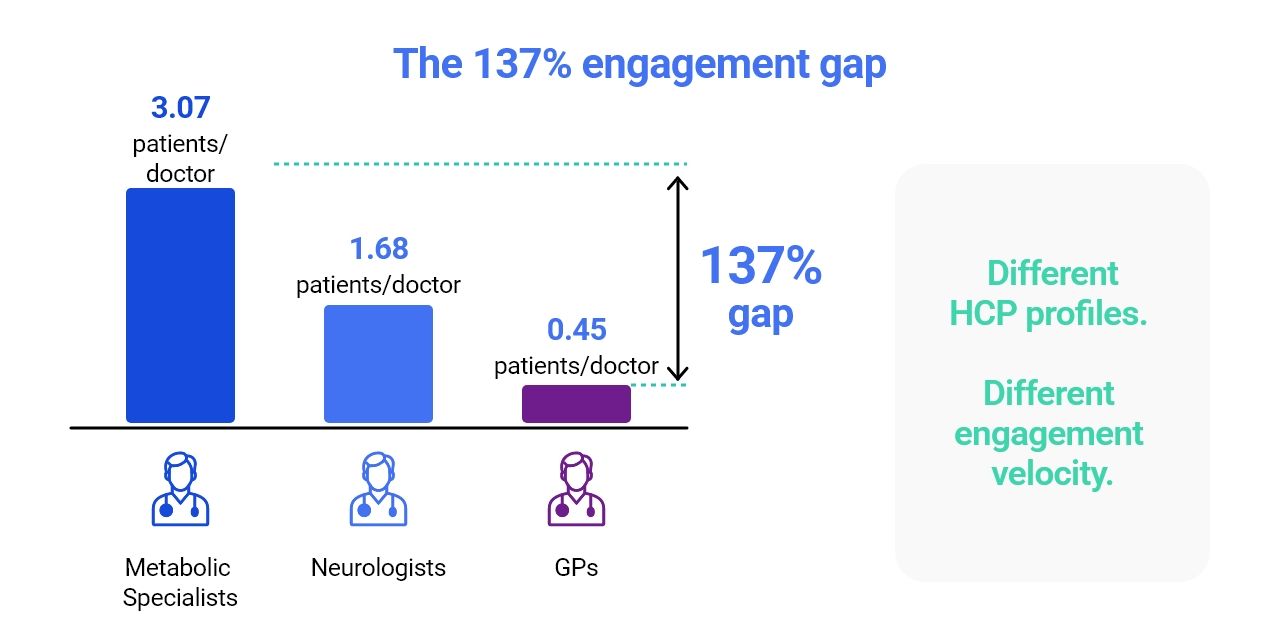
Enrollment velocity ranges from 3.07 patients per doctor among metabolic specialists, to 1.68 among neurologists, and 0.45 among GPs. This represents a 137% difference between the fastest and slowest cohorts.
The number is important, but what it tells us about HCP behavior is even more important.
Rather than pointing to a single engagement model, the data suggests that there are distinct HCP profiles interacting with the platform in different ways. Their level of engagement may reflect not only specialty, but also how they incorporate patient support into their existing clinical workflow.
Two active doctor profiles
Within this landscape, two active doctor profiles stand out:
The High-Volume Initiator
This HCP uses patient support services across a broad range of patient profiles and is comfortable following the program pathway defined by the Pharma company.
For them, simplicity and speed matter. They want to enroll a patient in seconds and trust the platform to handle the rest.
The program becomes a natural extension of their prescribing workflow — something that can be activated quickly without adding complexity to the consultation.
The Treatment Manager
This HCP takes a more data-oriented approach. They incorporate StayOnTreatment dashboards into their patient monitoring routine, using the platform as an additional source of information to support ongoing treatment management.
For this profile, data richness and visibility are key. The platform is not simply an enrollment mechanism; it becomes an additional layer of insight into the patient's treatment journey.
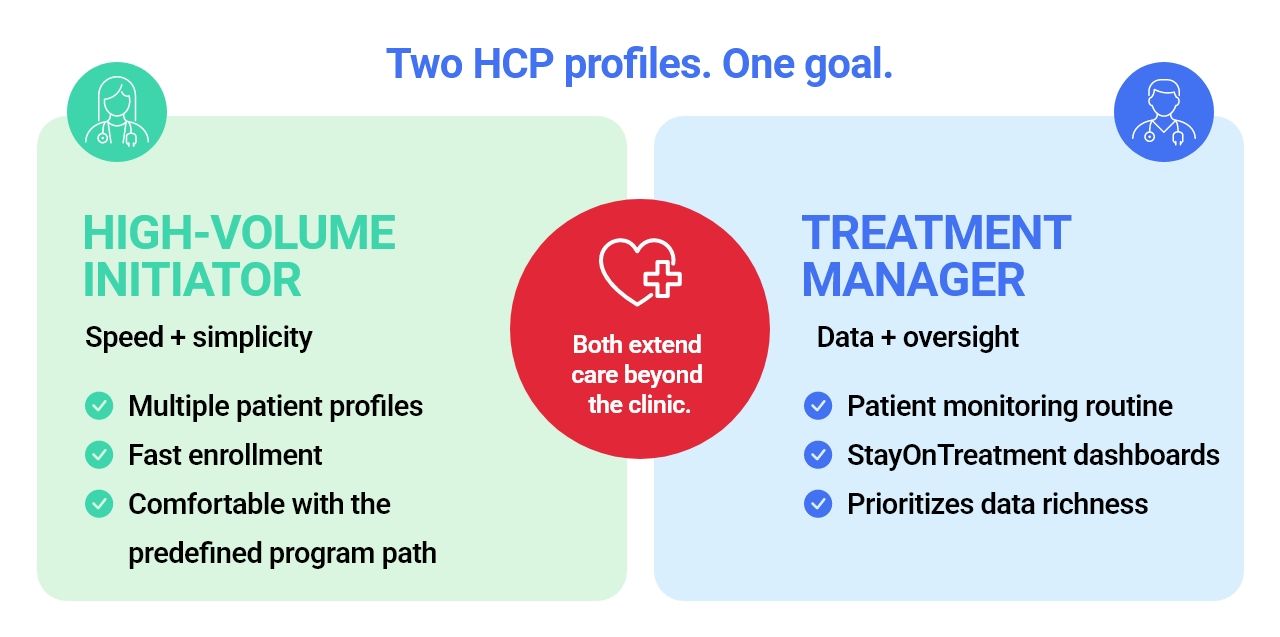
These profiles may approach the platform differently, but they share an important objective: extending care beyond the clinic.
This is where a one-size-fits-all adherence program can fall short.
If a program is designed only for speed, it may not provide enough visibility for the Treatment Manager. If it is built primarily around data and monitoring, it may introduce unnecessary friction for the High-Volume Initiator.
The answer is not to choose between the two.
It is to build a platform flexible enough to accommodate both.
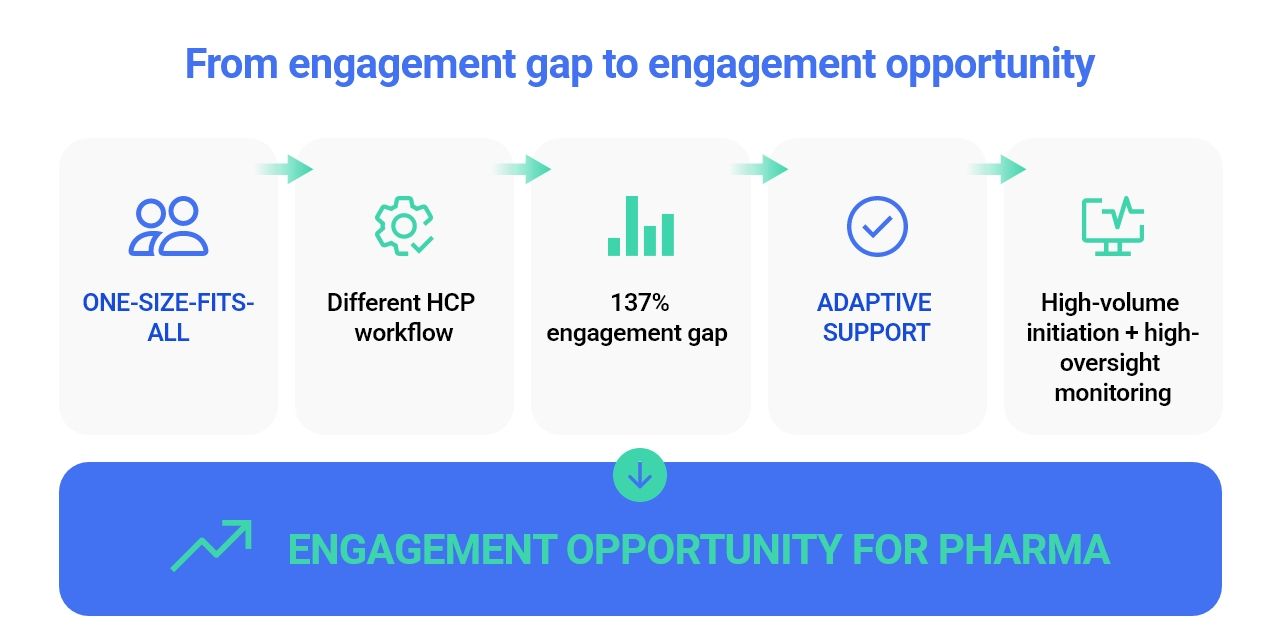
By serving both profiles, StayOnTreatment closes the gap between the prescription and the patient’s ongoing treatment journey.
A platform built for this level of complexity gives every specialist, whether high-volume or high-oversight, the tools that fit the way they actually work.
And that is the opportunity for Pharma: not forcing every HCP into the same engagement model, but using differences in engagement to create a more relevant, more effective and ultimately broader patient support experience.
The 137% engagement gap is therefore more than a performance difference between specialist groups. It is a signal that HCP engagement is not one-dimensional.
Different specialists. Different workflows. One shared opportunity: extending care beyond the clinic.