From 2.9% to 0.25%: The retention data behind treatment adherence program design

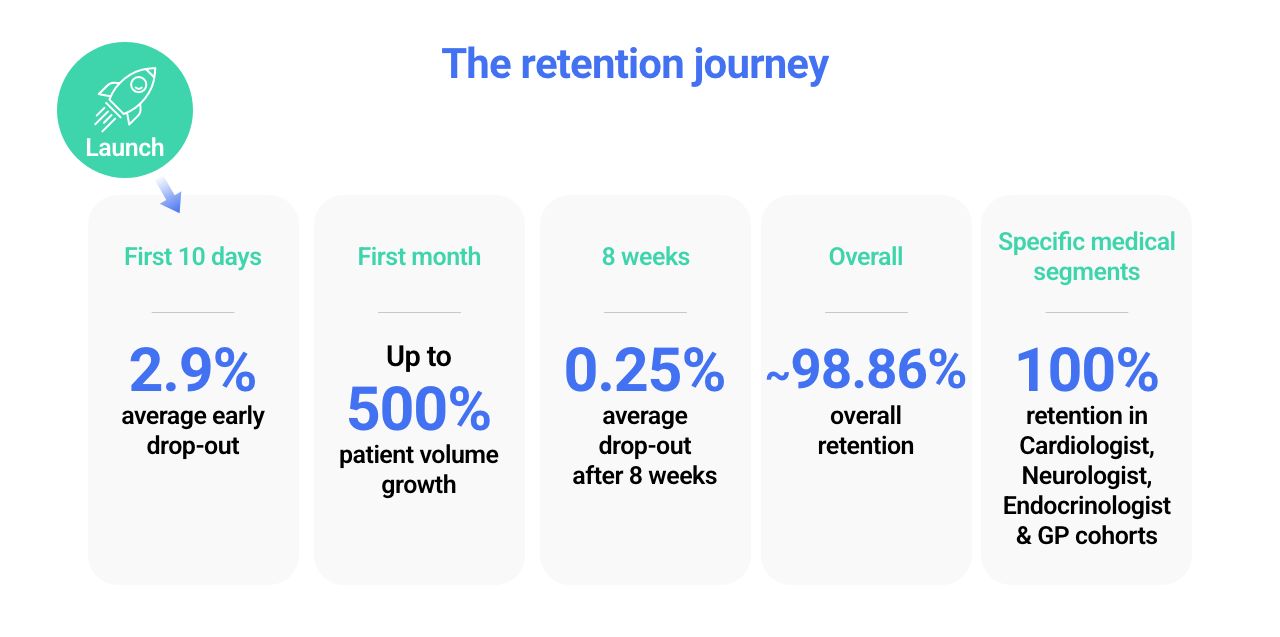
In the first ten days after launching any program, patient churn on our platform averages 2.9%. Eight weeks later, as the patient cohort grows, that number tells a very different story.
By the middle of the first month after launching a treatment adherence support program, Pharma partners may raise an early warning flag: patient drop-out can reach up to 2.9%.
Early-phase drop-out or churn is common with any new platform launch. However, an initial signal is only useful if you continue to track how it evolves as the program grows. We did.
From early churn to sustained retention
As patient volumes scaled by an average of up to 500% over the following eight weeks, the average drop-out rate decreased from 2.9% to 0.25%, while overall retention reached approximately 99%.
The picture was even stronger across specific medical segments. Among patients enrolled by Cardiologists, Neurologists, Endocrinologists, and GPs, retention remained at 100% during the first two months, with not a single patient exiting the program.
Why does retention matter?
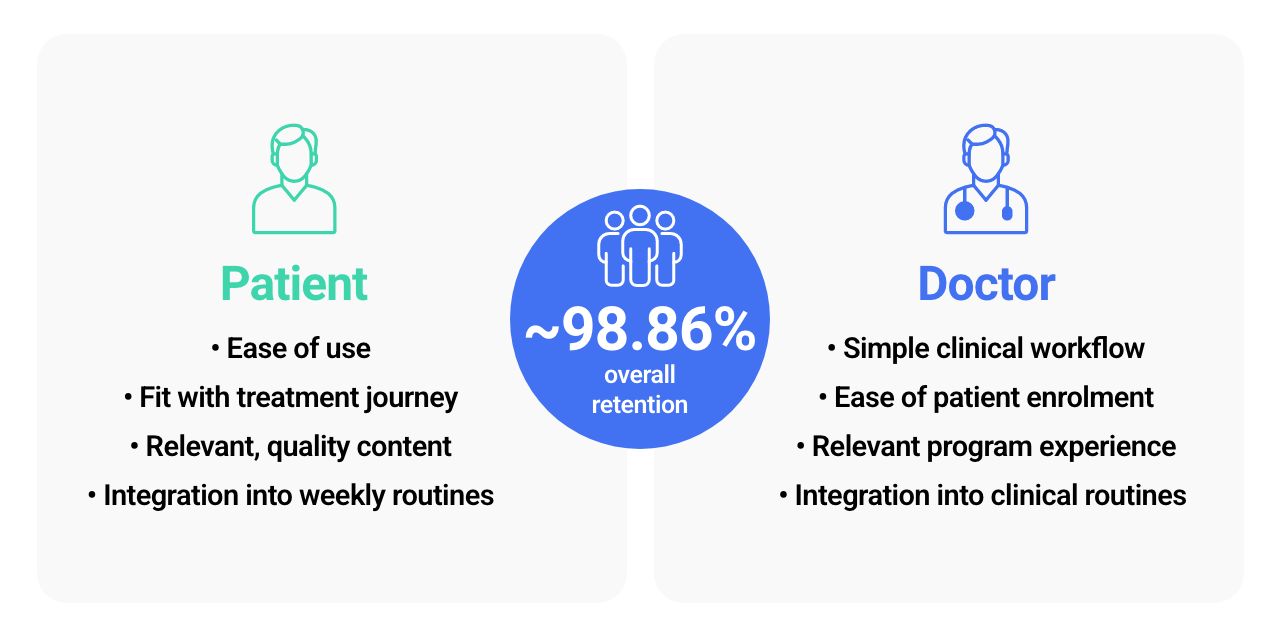
At this scale, retention becomes one of the clearest available indicators of a positive patient and doctor experience, from ease of use and platform experience to the relevance and quality of the content being delivered.
Retention is a shared outcome
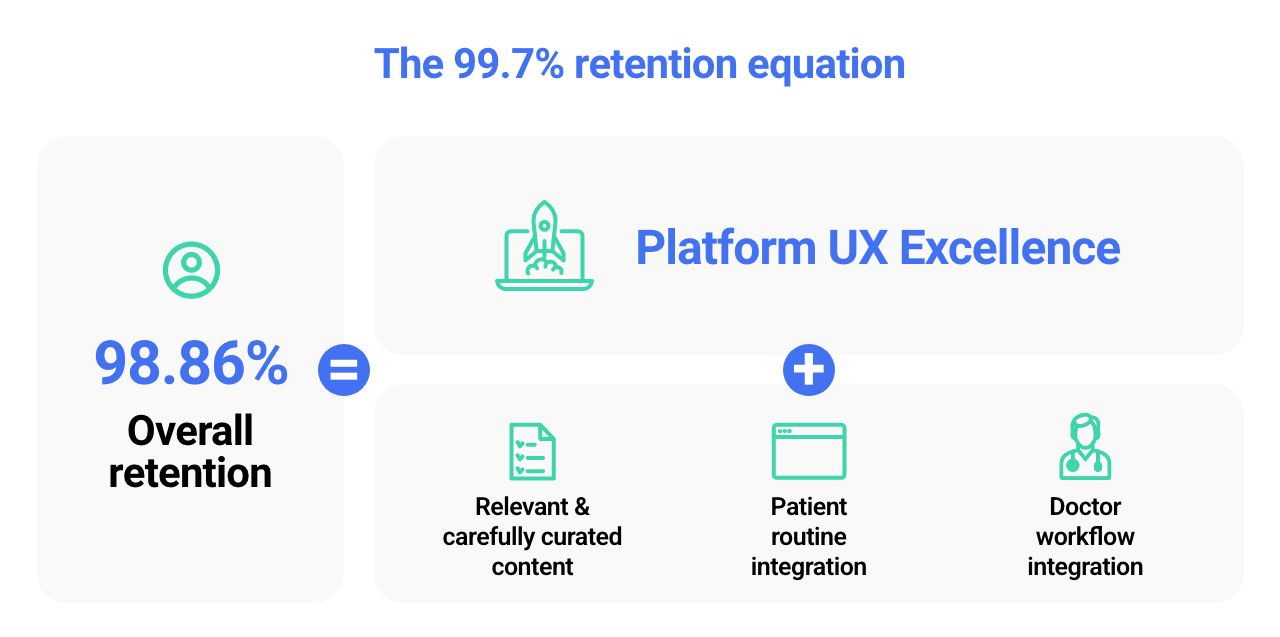
Delivering an average 98.86% retention rate across our active programs is not the result of a single factor. It reflects the combination of User Experience Excellence on the platform side and careful content curation on the Pharma Program Owner side.
The data therefore points to a broader principle for treatment adherence program design: retention needs to be considered as an ongoing measure of program fit, not simply as an early launch metric.
A higher initial drop-out rate can be an expected signal during the early stages of a new program. What matters is whether the experience improves as patients and doctors become familiar with the platform — and whether the program ultimately earns a place in their regular routines and workflows.
In our active programs, that evolution is reflected in the numbers: from an average 2.9% early drop-out rate to 0.25%, alongside 99% overall retention.